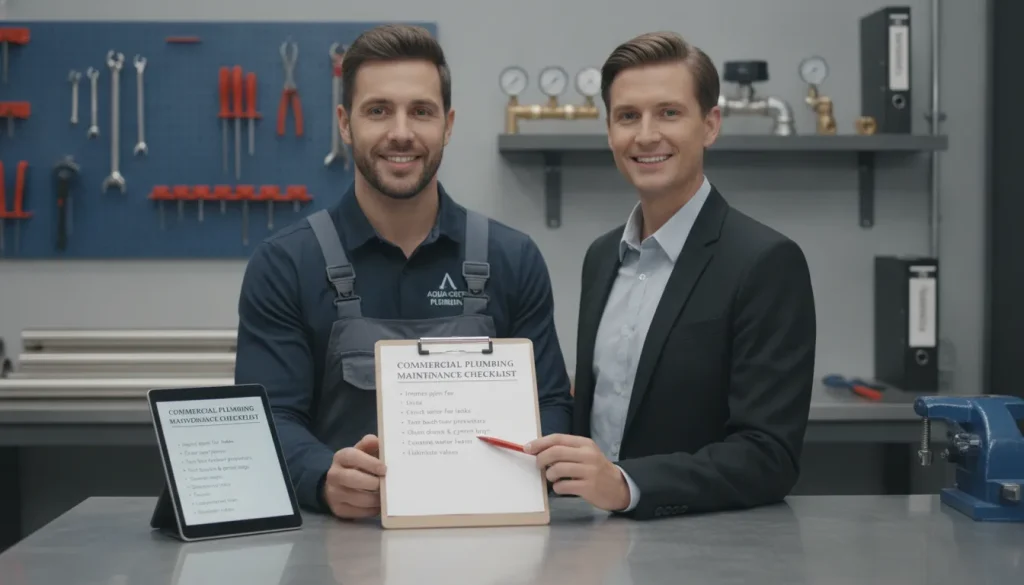
A small plumbing leak in one unit can become a building-wide problem quickly. For offices, retail spaces, apartments, and multi-unit properties in Lewisville, Texas, a commercial plumbing maintenance checklist gives owners and managers a repeatable way to identify leaks, drainage concerns, fixture problems, and hot-water issues before they interrupt daily operations. Rather than waiting for an emergency, property teams can use scheduled checks to document conditions and arrange service when needed.
Lewisville Texas Plumbing helps local property owners and managers maintain commercial and shared plumbing systems, from routine inspections to drain repairs, leak detection, pipe repairs, and water-heater service. A clear maintenance routine is especially useful where multiple tenants share water lines, sewer lines, restrooms, or utility equipment.
Key Takeaways
- A commercial plumbing maintenance checklist helps teams find small leaks, slow drains, and failing fixtures early.
- Monthly visual checks, quarterly system reviews, and annual planning inspections suit many commercial properties.
- Service logs help managers identify repeat plumbing complaints and plan repairs around building activity.
- Recurring clogs, sewer odors, pressure changes, and uneven hot water require professional attention.
- Lewisville Texas Plumbing can help property teams in Lewisville, Texas create a maintenance plan suited to their building.
Why a Commercial Plumbing Maintenance Checklist Matters
A commercial plumbing maintenance checklist matters because most plumbing failures begin as minor, easy-to-miss issues. A drip beneath a sink, a toilet that continues running, a slow floor drain, or a valve that will not fully close may not stop operations immediately. In a busy property, however, these early warnings can go unnoticed until they lead to water damage, tenant complaints, blocked drains, or an urgent repair call.
Routine checks are particularly important for managed and multi-unit properties. One sewer blockage can affect several tenants, while a hidden leak can damage drywall, flooring, and stored inventory. Excess moisture may also contribute to mold conditions if it is not addressed promptly. A documented checklist helps owners, managers, and HOA boards evaluate the complete system instead of reacting to individual complaints one at a time.
This type of plan serves many property decision-makers. Owners can use it to protect the condition of the building, managers can track recurring service requests, and investors or first-time commercial buyers can better understand potential maintenance needs. Lewisville Texas Plumbing often works with property teams to review plumbing conditions during scheduled service visits and after repeat concerns arise.
What to Include in a Commercial Plumbing Maintenance Checklist
A useful commercial plumbing maintenance checklist covers components that commonly wear out and components that can cause wider disruption if they fail. Begin with the water supply line, which is the piping that carries clean water into the building and out to fixtures and appliances. Check visible supply lines, shutoff valves, and pressure conditions for signs of leaks, corrosion, restricted access, or inconsistent performance. Valves should operate properly so water can be isolated quickly if a leak develops.
Water pressure also deserves attention. Pressure that is too high can place extra strain on fixtures, appliance connections, and pipes, while low pressure can affect sinks, toilets, cleaning tasks, and tenant comfort. If complaints involve more than one fixture or unit, the issue may be related to a shared supply line, valve, regulator, or other system component rather than a single faucet.
Drains need regular observation as well. A drain line carries wastewater away from sinks, toilets, showers, floor drains, and equipment. Slow flow, gurgling, unpleasant odors, standing water, and repeat clogs are all warning signs that should be recorded. In larger buildings, sewer issues often first appear in lower-level units, common restrooms, or floor drains. A checklist should identify where the issue occurs, how often it happens, and whether it returns after basic cleaning or plunging.
Water heaters should be included in every commercial maintenance routine. Although some people use the term geyser, most properties in the United States use water heaters. Inspect units for steady hot-water delivery, rust, moisture around connections, unusual noises, and long recovery times. Recovery time is how long a water heater takes to produce more hot water after demand. If hot water runs out too quickly, the cause may involve sediment buildup, aging equipment, a failing component, or a unit that no longer matches the building's demand.
Leaks and fixtures are another essential category. Toilets should flush correctly and stop running after use, faucets should not drip, and exposed piping should be checked for moisture, rust, corrosion, or staining on nearby surfaces. Tenant plumbing complaints should be logged instead of handled as isolated events. When the same issue occurs in the same area repeatedly, it may point to a larger concern that needs professional inspection.
A simple checklist may include:
- Supply lines and shutoff valves for leaks, wear, corrosion, and access.
- Water pressure checks in areas with repeated pressure complaints.
- Drains and sewer lines for slow flow, odors, gurgling, and recurring blockages.
- Water heaters for temperature consistency, age, recovery time, and signs of damage.
- Fixtures and tenant reports for recurring patterns that need deeper review.
How Often Commercial Plumbing Systems Should Be Inspected
The right inspection schedule depends on the building type, plumbing age, tenant count, and daily demand. For many properties, monthly visual checks work well for visible leaks, shared restrooms, floor drains, water-heater conditions, and tenant complaint logs. These brief checks make it easier to notice a change before it becomes a larger disruption.
Quarterly reviews can go further by checking shutoff valves, drain performance, water pressure concerns, fixture operation, and areas with a history of repairs. Annual reviews are helpful for broader planning, including reviewing aging components, recurring trouble spots, pipe conditions, and potential repair priorities. The checklist should be adapted when the property has known risks, such as previous sewer backups, slab leaks, failing fixtures, or frequent water-heater complaints.
Older properties and high-use buildings commonly need more frequent monitoring. Shared laundry rooms, commercial kitchens, high-traffic restrooms, and buildings with many tenants place added demand on drains, valves, water heaters, and supply piping. Commercial kitchens may also need targeted attention to kitchen sinks, grease-related drainage concerns, and equipment connections; see our kitchen plumbing service page for related support.
Recordkeeping is a major part of an effective maintenance process. A service log should identify what was inspected, what was found, which repairs were completed, and which issues need follow-up. Over time, records reveal patterns that can help with repair planning, vendor coordination, building reports, and scheduling work around tenant needs. Lewisville Texas Plumbing can help property owners in Lewisville, Texas establish a practical inspection and service routine based on the layout and history of the building.
When to Call a Commercial Plumber for Preventative Service
Some concerns go beyond a basic walk-through. Call a commercial plumber when a property has recurring drain clogs, repeated leaks, low water pressure at multiple fixtures, sewer odors, uneven hot water, unexplained moisture, or signs of a hidden leak. These symptoms can indicate problems inside walls, beneath slabs, in shared lines, or farther along the sewer system—areas that require professional tools and diagnosis.
Preventative service is often easier to schedule than an emergency response. It allows managers to arrange building access before a busy season, lease turnover, inspection, or high-occupancy period. Planning ahead can reduce tenant disruption and gives the property team time to address developing issues before water damage or a blockage spreads.
A long-term maintenance plan should reflect the building's age, layout, usage, and repair history. It should include scheduled checks, detailed records, a process for responding to new complaints, and a trusted plumbing professional for deeper inspections and repairs. If an active leak, sewer backup, or sudden loss of water requires immediate attention, visit our emergency plumbing page for prompt assistance.
For inspections, repeat repairs, leak detection, pipe concerns, blocked drains, or a custom commercial maintenance plan, Contact us at Lewisville Texas Plumbing. Call +1 972 362 1446 or email hello@lewisvilletexasplumbing.com to discuss your Lewisville, Texas property and its plumbing needs.
FAQ
What is included in a commercial plumbing maintenance checklist?
A commercial plumbing maintenance checklist generally includes supply lines, shutoff valves, drains, water heaters, fixtures, pressure checks, and leak inspection points. It should also document tenant complaints, recurring problem locations, completed repairs, and follow-up needs. The purpose is to help managers monitor system condition and take action before minor issues become major repairs.
How often should commercial plumbing be inspected?
Many properties benefit from monthly visual checks, quarterly system reviews, and annual planning inspections. The best schedule depends on the age of the building, number of occupants, fixture count, and daily water use. Older buildings and properties with heavy restroom, kitchen, or laundry use may need checks more often.
Why do managed properties need routine plumbing maintenance?
Managed properties often have shared systems, numerous fixtures, and more daily use than a single residence. As a result, one hidden issue can affect multiple units or tenants quickly. Routine maintenance helps identify developing leaks, drainage problems, and water-heater concerns while improving repair planning and reducing unexpected disruptions.
When should a property manager call a commercial plumber?
A property manager should call a commercial plumber when plumbing problems repeat, affect multiple fixtures, spread between units, or create health and property-damage concerns. Common indicators include sewer odors, frequent clogs, low pressure, uneven hot water, visible water stains, and suspected hidden leaks. Preventative service is also appropriate before busy seasons, tenant move-ins, or planned property inspections.
Conclusion
A plumbing system is easier to manage when it is inspected regularly instead of only after a failure. For property owners and managers, a reliable checklist creates a clear routine for monitoring leaks, drains, valves, fixtures, and hot-water equipment. It also makes it easier to determine when a simple repair is appropriate and when a licensed commercial plumber should inspect the system.
Lewisville Texas Plumbing provides commercial and property plumbing support for teams throughout Lewisville, Texas. If your building needs a maintenance review, help with recurring plumbing problems, or preventative service planning, Contact us today at +1 972 362 1446 or hello@lewisvilletexasplumbing.com.