Automatic faucet and flush valve repair can restore steady water flow and proper flushing when a fixture stops working or keeps running. In Lewisville, begin with safe checks: clean the sensor lens, look at visible power signs, and confirm the water supply is open. Leave leaks, wiring faults, and internal repairs to a qualified plumber.
Restrooms in homes and businesses rely on faucets and flush valves that work each time. A small fault can waste water, interrupt service, and frustrate visitors. In Lewisville, Texas, knowing what you can check—and when to stop—helps protect people and plumbing. Lewisville Texas Plumbing can help property owners understand repair needs and plan the next step.
Table of Contents
- How do automatic faucets and flush valves work?
- What are the most common problems with automatic faucets and flush valves?
- What should you check before calling for a repair?
- How are automatic faucets and flush valves diagnosed and repaired?
- When should a commercial automatic faucet or flush valve be replaced?
- How can businesses prevent repeat problems and downtime?
- What should you expect from professional commercial restroom plumbing service?
How do automatic faucets and flush valves work?
Automatic faucets use a sensor to detect hands near the fixture. The sensor sends a signal to a valve, which lets water flow. When hands move away, the valve should stop the flow. Many models use batteries or connect to building power, but the setup depends on the faucet.
How sensor faucets detect users and control water flow
The sensor lens is the small window that sends and receives a signal. When it detects a hand, the control unit opens a solenoid valve. A solenoid valve is an electrically controlled part that starts or stops water flow. Some faucets also have a control for water temperature or flow.
A dirty lens, weak power source, or stuck valve can affect how the faucet works. Dirt and water spots may confuse the sensor, while a closed supply or blocked filter can limit water. A filter catches small bits before they reach the valve. These causes can look alike, so a symptom does not always point to one part.
How commercial flush valves release water
A flush valve sends water from a supply line into a toilet or urinal. In an automatic model, a sensor detects use and signals the valve to flush. Some models use batteries, while others connect to building power. The valve must suit both the fixture and water supply.
A flush valve differs from the flapper in a tank toilet. A flush valve controls water at the supply line. A flapper releases water from a tank. Knowing which kind is installed can help narrow down the fault and help a plumber choose the right parts.
What are the most common problems with automatic faucets and flush valves?
Common faults include no water, constant flow, weak flow, unwanted starts, and toilets that will not flush. The cause may be a power issue, dirty sensor, blocked filter, worn seal, or failed valve. A single symptom does not prove which part needs repair.
Faucets that do not turn on, shut off, or maintain steady flow
If a faucet does not turn on, check whether its sensor lens is dirty and whether the water supply is open. If water keeps running, the sensor may be blocked or the valve may not close. Weak or uneven flow can point to a clogged aerator, blocked filter, or supply problem.
A faucet that starts and stops by itself may be reacting to reflections or nearby movement. A loose power link or failing solenoid can also cause odd behavior. Keep the sink area clear while watching the faucet. Do not place fingers or tools inside the valve housing.
Flush valves that keep running, fail to flush, or leak
A toilet that keeps running may have a valve that does not close all the way. A toilet repair flush valve kit may include seals, but the right kit depends on the fixture model. Parts that do not fit can leave the fault in place or cause a leak.
A flush valve that does not flush may have a power, sensor, supply, or internal valve problem. Do not ignore water leaking near a fixture or valve. If it is safe and easy, shut off the local supply and keep people clear of the wet area. Related toilet problems may need Toilet Repair.
What should you check before calling for a repair?
A few safe checks may solve simple problems without a service visit. Clean the sensor lens, look for a visible power sign, and check that the supply valve is open. Stop if water leaks, wiring looks damaged, or the fixture must be opened to continue.
Safe checks for batteries, power, sensor lenses, and water supply
Use this simple checklist before arranging plumbing repair:
- Wipe the sensor lens with a soft, damp cloth, then dry it.
- Check the battery area or visible power sign, if the model has one.
- Move items that may block the sensor near a sink or toilet.
- Look for a closed supply valve or a bent visible supply line.
- Note when the fault happens and whether other fixtures act the same way.
These checks do not require taking a fixture apart. A property owner or staff member can usually clean an exposed lens and note what they see. Do not use harsh cleaners on the sensor or force a valve handle. Follow the maker’s care directions when they are available.
Why repeated resets or disassembly can make a problem worse
A reset may clear a short-term fault, but doing it again and again can hide a problem that needs repair. Opening a powered fixture or valve can cause an electrical hazard or water damage. Small internal parts can also break or go back in the wrong order.
Stop using the fixture if there is a strong leak, exposed wire, or water near an electrical connection. Keep people away from the area. Shut off the supply only if the valve is easy to reach and safe to use. A plumber can check the cause and reduce guesswork.
How are automatic faucets and flush valves diagnosed and repaired?
A plumber starts by checking the fixture type, model, and symptoms. They look at power, sensor response, water supply, and visible leaks before testing parts inside. The goal is to find the cause, not just replace the first part that looks worn.
Inspecting sensors, solenoids, filters, cartridges, and connections
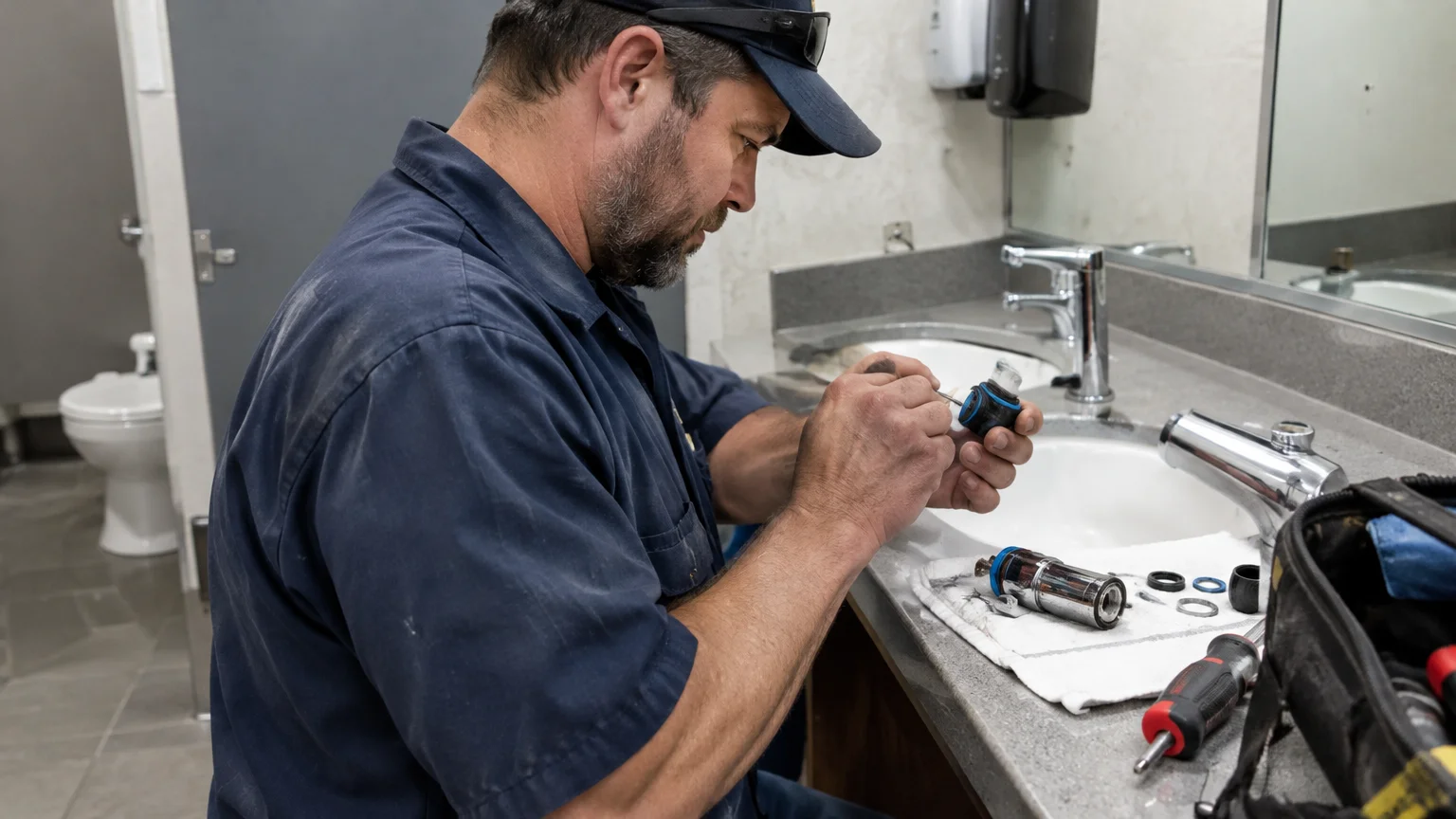
A service check may include testing the sensor, solenoid valve, filter, cartridge, and supply connections. A cartridge is an inner part that controls water flow in some faucets. The plumber may clear or replace a blocked filter, fix a loose connection, or fit a part made for that fixture.
For toilet flush valve repair, the plumber checks whether the valve closes fully and whether seals or other parts are worn. A tank toilet may need different parts from a commercial flushometer. A flushometer is a valve joined directly to a water supply line instead of a tank. The correct repair depends on the installed system.
Testing operation and checking for leaks after repair
After the work, the plumber runs the fixture through normal use. They check that the faucet starts and stops as expected and that the flush valve opens and closes. They also look for leaks at supply connections and around the fixture.
Testing matters because a fixture may seem fixed but still waste water or fail during regular use. Staff should report if the same fault returns. For a Moen sink faucet repair, the model and part details help guide the work. The same care applies to other brands and commercial fixtures.
When should a commercial automatic faucet or flush valve be replaced?
Repair often makes sense when the fixture is in good shape and the needed part is available. Replacement may be a better choice when faults return, parts are hard to find, or the fixture no longer suits the restroom. A plumber can review the condition, use, and fit before work starts.
Repair considerations: part availability, recurring faults, and fixture condition
One worn seal or sensor may be a simple repair. But repeated problems can point to deeper wear, a poor fit, or heavy use. Rust, cracks, and damaged connections also affect whether a repair is a sound choice. The right fix depends on the cause and the fixture’s condition.
The right toilet flush valve repair kit must match the valve model. A kit that looks alike may have seals or sizes that differ. If the model label is missing, a plumber can inspect the fixture and find suitable parts. Do not choose a kit based on looks alone.
Replacement considerations: compatibility, accessibility, and water efficiency
A replacement faucet or valve must fit the sink or toilet, connect to the supply, and work with the power source. In a public restroom, controls should also work for people with different needs. A plumber can check space, access, and the fixture’s intended use before a new unit is fitted.
Water-saving fixtures may reduce waste when they are chosen and installed correctly. The best choice depends on the building and the plumbing already in place. Do not replace a fixture before checking why it failed. A supply issue or wrong setting could also affect a new unit.
How can businesses prevent repeat problems and downtime?
Regular care helps staff notice small issues before they disrupt a restroom. Clean sensors as the maker directs, check for drips, and report changes in flow or flushing. A simple care plan should suit how often people use the restroom.
Routine cleaning and inspection for high-use restrooms
Use gentle cleaning methods that will not scratch sensor lenses or harm seals. Keep cleaning products from collecting around faucet and flush valve bases. During routine checks, look for slow drips, unexpected running, weak flow, and delays when the sensor responds.
Staff can report a problem without opening the fixture. A short note about the restroom, symptoms, and time of day can help a plumber find the cause. If a toilet keeps running, mark it for prompt attention to limit water waste and disruption. This early report can also help staff keep the area safe.
Planning maintenance around occupancy and fixture demand
Businesses should plan checks around restroom use and building needs. A busy site may need more frequent visual checks than a small office. Keep records of repairs, model details, and repeat symptoms so future work can be planned well.
In Lewisville, property managers can ask Lewisville Texas Plumbing about care planning for commercial restrooms. If several fixtures have the same fault, note whether they share a water supply or power source. That detail may help tell a single-fixture problem from a wider building issue. It can also guide related plumbing repair, drain repair, or pipe repair checks when symptoms point beyond one fixture.
What should you expect from professional commercial restroom plumbing service?
A clear service visit starts with fixture details and a simple account of the problem. The plumber should inspect the system, explain repair choices, and test the fixture afterward. Businesses should know what was fixed and whether more checks are needed.
Preparing fixture details and describing symptoms clearly
Before service, note the restroom location, fixture type, brand, and model if visible. Describe what happens, when it began, and whether the fault is constant or comes and goes. Mention leaks, power lights, odd sounds, or other fixtures that are affected.
Do not remove covers just to find a model label. A photo of the outside of the fixture may help if it is safe to take. Keep the work area clear for the plumber, and let staff know if the fixture should stay out of use.
Confirming the repair, testing performance, and documenting follow-up needs
After the repair, ask which part caused the fault and what work was done. Confirm that the faucet or flush valve was tested and that visible connections are dry. Write down any care advice or signs that staff should watch for.
A clear record can help with future maintenance and repair costs by showing which parts have failed before. Other plumbing concerns may need separate checks. For example, a leak may call for leaks or pipe repair, while hot water trouble may need Water Heater Repair. Suspected gas trouble needs a safe response; Gas Line Plumbing is not a do-it-yourself task.
Key takeaways
- Automatic fixtures need working sensors, power, valves, and water supply.
- Cleaning a sensor lens and checking visible power are safe first steps.
- A toilet flush valve repair kit must match the installed valve.
- Stop and seek help for leaks, damaged wires, or repeated faults.
- Testing after repair helps confirm the fixture works and does not leak.
Frequently Asked Questions
How do you fix a toilet that keeps running?
A running toilet may have a flush valve that does not close, a worn seal, or a sensor fault. Check for an obvious blockage and note whether the toilet has a tank or a direct-supply valve. Do not open a commercial valve. A plumber can find the cause and fit parts that match.
Can a homeowner clean an automatic faucet sensor?
Yes. A homeowner or staff member can gently wipe the exposed sensor lens with a soft, damp cloth, then dry it. Keep harsh cleaners and tools away from the lens. If the faucet still fails or water leaks, stop and ask a plumber to check it.
What causes low water pressure in a house?
Low water pressure can come from a partly closed valve, a blocked fixture screen, a supply problem, or a leak. Check whether only one faucet has low flow or several fixtures do. If pressure drops across the home or you see a leak, a plumber can inspect the supply and fixtures safely.
What should you do if a water heater is leaking from the bottom?
Keep people away from standing water near electrical parts. If safe, shut off the water supply to the heater and stop using it. A leak near the bottom can have more than one cause, so arrange a professional check. Water Heater Repair can help assess the unit.
How do you check for gas leaks?
Do not use a flame or operate switches if you suspect a gas leak. Leave the area and contact the gas utility or emergency services from a safe place. A qualified professional can inspect gas piping. Gas Line Plumbing handles gas line work; do not try to find a leak yourself.
Conclusion
Automatic faucet and flush valve problems may come from dirt, low power, or worn parts. Safe checks can help, but leaks, electrical faults, and repeat problems need professional care. Lewisville Texas Plumbing can help businesses in Lewisville review commercial restroom plumbing and plan a suitable repair. Contact us to arrange help with a faulty faucet or flush valve.