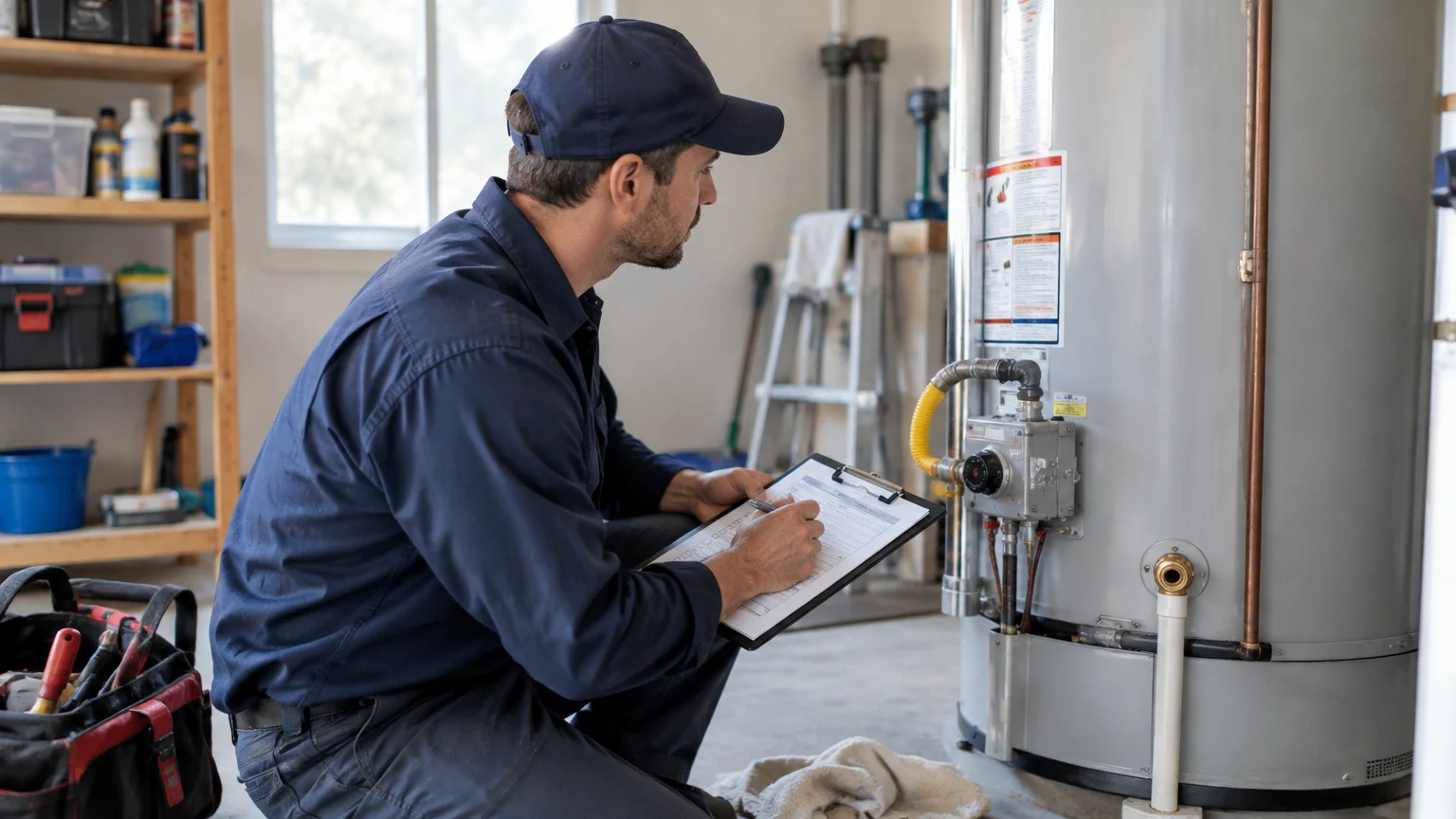
A water heater maintenance checklist helps you spot leaks, damage, and changes in hot water before they become bigger problems. Check the unit from a safe distance, follow the maker’s manual, and leave gas, wiring, and safety parts alone. Homeowners in Lewisville can handle simple visual checks, but some repairs need a licensed plumber.
What does routine water heater maintenance include?
Routine maintenance means checking the heater and following the care steps in its manual. The right tasks depend on whether it stores hot water in a tank or heats water as it flows. A tankless water heater has different parts and care needs than a tank model. Lewisville Texas Plumbing can help property owners in Lewisville learn which steps fit their system.
Know your water heater type and check the manufacturer’s guidance
Start by finding the model label and reading the owner’s manual. It explains the unit type, safe use, and care needs. A tank heater stores hot water in an insulated tank. A tankless unit heats water as it moves through the system. The manual may also explain how to check filters or arrange service.
Do not guess if the manual is missing or hard to follow. A plumber for water heater repair can help identify the model and explain its needs. This is also a good time to note the unit’s age, past repairs, and any changes in hot water. Keep these notes with the manual for later checks.
Gather basic safety precautions before inspecting the unit
Before you look closely, keep the space around the heater clear and dry. Do not touch wet wires, remove covers, or change gas controls. If you smell gas, leave without using switches or flames. Once outside, contact the gas utility or emergency services for help. The U.S. Consumer Product Safety Commission shares guidance on carbon monoxide risks from fuel-burning appliances.
Homeowners do not need a professional for simple visual checks or for keeping the area clear. But work on gas lines, wiring, vents, or safety parts needs a trained professional. Do not open a sealed panel or try to fix a leak. Staying safe matters more than finishing every item on a checklist.
What should you check during a water heater maintenance inspection?
Use these ten checks to notice changes, not to take the heater apart. Stop if a check could expose you to hot water, gas, wiring, or a valve you are unsure how to use. A visual review may help you decide when to ask about Water Heater Repair or other service.
Steps 1–5: Inspect for leaks, corrosion, ventilation issues, and temperature changes
- Look for water. Check the floor, pipes, and tank base for damp spots or puddles.
- Look for rust or corrosion. Check visible fittings and the tank’s outside. Do not scrape or remove parts.
- Check the vent area. For fuel-burning heaters, look from a safe distance for loose or blocked vent parts.
- Notice changes in hot water. Write down if hot water runs out sooner or changes temperature without warning.
- Listen for new sounds. Popping or rumbling may mean sediment has built up or another issue needs review.
Keep the space around the heater open so air can move and the unit can be checked. Do not place items against vents or controls. Low water pressure may have a cause that is separate from the heater. A plumber can check whether the heater, pipes, drains, or another part of the plumbing system is involved.
Steps 6–10: Check the pressure relief valve, flush sediment when appropriate, and review connections and controls
- Find the pressure relief valve. This safety part lets excess pressure out. Do not test or use it unless the manual gives clear steps and the task is safe.
- Ask if flushing is right for the unit. Sediment can collect in tank heaters, but hot water can burn you or harm the unit. Follow the manual or ask a plumber.
- Look at visible connections. Check for drips or fittings that look loose. Do not tighten parts while the heater is hot or running.
- Review outside controls. Note warning lights, error messages, or settings that have changed.
- Write down what you find. Record the date and any change in sounds, leaks, or hot-water supply.
Tankless units may need filter care or checks for mineral buildup, as the maker directs. Tank heaters may need other checks. Anode rod replacement can also help protect some tank models from rust. Do not assume every water heater needs the same task or care schedule.
How often should a water heater be maintained?
Follow the owner’s manual first, since care needs vary by model. Water quality, household use, and heater type can also affect service needs. A busy home or a heater with hard-water buildup may need more attention than a lightly used system. Keep notes so you can spot changes over time.
Adjust the schedule for water quality, usage, and heater type
Check the heater’s outside and the nearby floor from time to time. Pay closer attention after a change in sound or hot-water supply. Look in the manual for a schedule for flushing, filter cleaning, or other care. Do not drain a tank just because a general checklist says to. The wrong steps can cause burns or damage the system.
Water conditions can differ across Lewisville and nearby areas, including Old Town, Valley Ridge, Castle Hills, Garden Ridge, and Vista Ridge. If mineral deposits keep returning, or a tankless unit shows a filter warning, ask a plumber what schedule fits the model. A plumber can explain whether the system needs cleaning or repair. This is safer than using one schedule for every home.
Know which maintenance tasks require a licensed plumber
Homeowners can keep the area clear, look for visible leaks, and note changes in how the heater works. Gas, electrical, vent, safety valve, and internal part work needs professional care. Never use a flame to check for a gas leak. If you smell gas, leave and contact the right emergency help from a safe place.
A qualified plumber can inspect parts that are hard to reach and explain any work the unit needs. For a tankless system, ask whether its setup affects venting or other parts. A professional can also explain tankless installation choices if you are thinking about a new unit. The right plan depends on the home, the heater, and local rules.
When should you repair or replace a water heater?
A leak, repeated loss of hot water, or a safety concern needs prompt attention. Repair may make sense when one part has failed and the rest of the unit is in good shape. Replacement may be worth discussing when problems keep returning or the heater no longer meets the property’s needs. A plumber can inspect the system before advising on repair or replacement.
Warning signs and repair-versus-replacement decisions
Watch for water at the base, rust, odd sounds, weak hot-water supply, or sudden temperature changes. A leak near the bottom may come from a failing tank or a nearby connection. The source needs to be checked, so do not assume a puddle means the tank must go. If water is spreading or near electrical parts, stay clear and get urgent help.
The choice depends on the cause, the heater’s condition, its repair history, and how well it serves the home. A small part problem may be repairable. A damaged tank or repeated failures may point to water heater replacement. Water Heater Installation can include choosing a tank or tankless model that fits the property and its hot-water needs.
Frequently Asked Questions
What should someone do if a water heater is leaking from the bottom?
Keep away from hot water and nearby electrical parts. From a safe distance, look to see if water may be coming from a pipe or the tank. If the leak is active or spreading, seek prompt plumbing help. A plumber can find the source and explain whether repair or replacement is needed.
Can homeowners flush a water heater themselves?
Only do this if the maker’s manual gives clear steps and you can follow them safely. Water inside a heater can cause burns, and wrong steps may damage parts. If the directions are unclear, or the unit has not been checked before, a licensed plumber should do the work.
How can someone check for a gas leak?
Never use a flame to check for gas. If you smell gas, leave the building without touching switches or using electronics inside. From a safe place, contact the gas utility or emergency services. Do not go back inside until the proper responders say it is safe.
Does a tankless water heater need maintenance?
Yes, but its care steps differ from those for a tank heater. The manual may describe filter cleaning or checks for mineral buildup. A plumber can confirm the right care plan for your model and review water heater repair needs if warning lights or hot-water problems appear.
Key takeaways
- Use the manual to guide care for your exact heater model.
- Keep the area clear and look for leaks or changes from a safe distance.
- Do not handle gas, wiring, or safety valves without proper training.
- Ask a plumber to review repeated problems and repair or replacement choices.
Conclusion
A steady care routine helps property owners notice changes early and avoid unsafe DIY work. Use this water heater maintenance checklist as a visual guide, then follow the maker’s directions for your unit. Lewisville Texas Plumbing serves property owners who need help with leaks, new sounds, or uneven hot water. Contact us to discuss the next step for your heater.